Learn Latest MEAN/MERN on job training & get placed as a MEAN/MERN Stack Developer
CIIT's MEAN/MERN Full Stack Development Training is ideal for both freshers and working professionals interested in building a career as a MEAN/MERN full stack developer.
Get Your Dream IT Job Just in 6 Months
The demand for MEAN/MERN Stack developers is high, particularly in enterprise environments (e.g., finance, healthcare, e-commerce) due to MEAN/MERN 's stability, scalability, and robust ecosystem
CIIT's A career in MEAN/MERN full stack development offers numerous benefits, primarily driven by the ability to work on all layers of a software application, from the front-end user interface to the back-end logic and databases. This comprehensive skill set makes developers highly versatile and valuable to employers.
Enquiry Now
Outcomes of the MEAN/MERN Stack Training
Both stacks utilize JavaScript end-to-end, which streamlines development and significantly reduces the time-to-market for modern web products.
-
High Salary Potential :
As of 2025, entry-level MERN/MEAN developers in India typically earn between ₹3.5 LPA and ₹7 LPA. Experienced senior developers (5+ years) can command salaries ranging from ₹20 LPA to over ₹35 LPA, especially those with AI integration expertise
-
Job Market Versatility :
Mastering these stacks qualifies professionals for varied roles, including Full-Stack Developer, UI/UX Specialist, Backend Engineer, and Cloud Architect.
-
Reduced Development Costs :
By hiring "full-stack" developers who can handle both front-end and back-end tasks, businesses can reduce their workforce needs and overall licensing fees since all components are open-source.
-
Scalability for Startups :
MERN is a primary choice for 2025 startups to build Minimum Viable Products (MVPs) quickly due to its flexibility and high-performance rendering for single-page applications.
-
Global Opportunities :
Due to the universal nature of JavaScript, developers are increasingly finding remote work with international firms, sometimes earning 2x–4x more than domestic counterparts.
Weekdays (Mon-Fri) - 6 Months
Weekends (Sat & Sun) - 7 Months
Course Information
Batches Available: Weekdays/Weekends
Training Mode: Classroom & Online
Language: English, Hindi, Marathi

100% Money Back Guarantee
5-Day Money-Back Guarantee : Till date We have trained 10000+ candidates including under graduates,fresheres and working professionals with expert knowledge. All are satiesfied with our training quality. So we are giving guarantee to all those who want to join our institute that if you're disappointed for whatever reason, you'll get your 100% refund. We won't make you invoke any rules or conditions – if you're not satisfied within your first 5 days then we'll refund you without any excuse.
Our Alumini works at Top MNCs & Indian Companies. So Can You!
What are the Benefits of Full Stack MEAN/MERN Stack Developer?
Uses JSON throughout, eliminating the need for data reformatting as it moves between the database and the UI, ensuring consistent data flow.
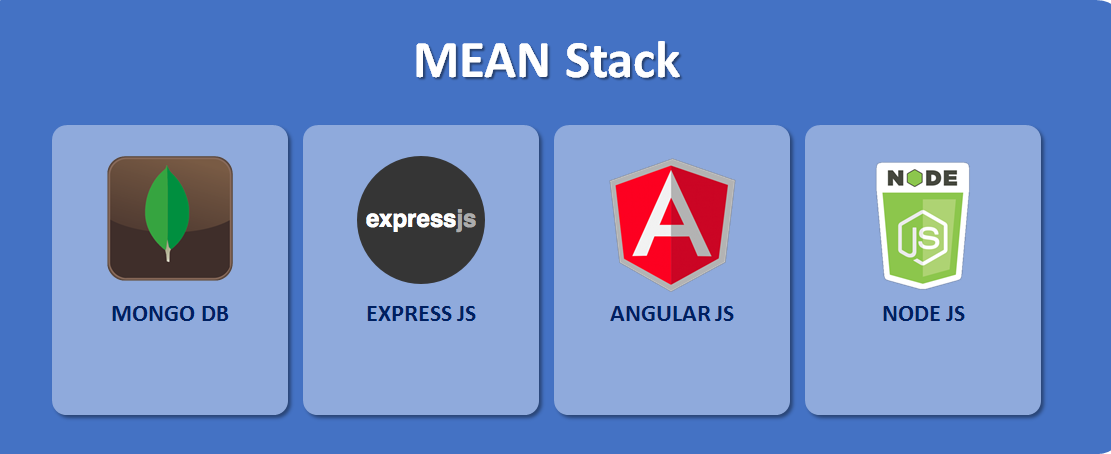
MEAN/MERN stack development offers benefits like faster, unified JavaScript development, reducing costs and time-to-market by using one language across front-end (React/Angular), back-end (Node/Express), and database (MongoDB). Key advantages include scalability, high performance, cost-effectiveness (open-source, no licensing fees), strong community support, and flexibility for building dynamic, interactive web apps.
KEY Features that Makes Us Better and Best Campus For You
Expert Trainers
Training will be provided by Industry experts with extensive experience
State-of-the-Art Infrastructure
Modern facilities and tools for an engaging learning experience.
Comprehensive Curriculum
In-depth courses designed to meet current industry standards and trends.
Flexible Schedules
Options for weekday, weekend, and online batches to suit your convenience.
Personalized Attention
Small batch sizes for individualized mentoring and guidance.
100% Real time Project Training
Real-world actual industry projects and practical sessions to become experienced.
100% Placement Assistance
Dedicated support to help you secure your dream job.
Affordable Fees
Quality training at competitive prices with flexible payment options.
Lifetime Access to Learning Materials
Revisit course content anytime for continuous learning
Industry-Recognized Certifications
Globally accepted credentials to boost your career prospects.
Diverse Course Offerings
A wide range of programs in IT, business, design, and more.
Why Learn MEAN/MERN in 2026?
-
Rapid Career Growth & High Demand :
-
Job Market Growth:
Jobs for full-stack and Node.js developers are projected to increase by 17–20% between 2025 and 2026.
-
Salary Projections (India):
While 2025 entry-level salaries range from ₹3.5–₹6 LPA, 2026 projections suggest a shift toward the higher end (₹6–₹8 LPA) for freshers with strong project portfolios.
-
Abundant Remote Work:
MERN skills are among the most sought-after for remote job openings globally, offering greater flexibility and higher compensation
-
Job Market Growth:
-
Technical Efficiency & Speed
:
-
Unified JavaScript Stack:
You eliminate "context switching" between different languages. A single language for frontend (React) and backend (Node/Express) leads to faster development cycles and easier debugging.
-
Reusable Components:
React’s component-based architecture allows you to reuse code, significantly reducing the time required to build and maintain complex user interfaces.
-
Real-Time Capabilities:
The event-driven, non-blocking nature of Node.js makes MERN ideal for 2026's high-demand features, such as real-time dashboards, chat apps, and live collaboration tools.
-
Unified JavaScript Stack:
-
Future-Proof Technology Integration:
-
AI-Readiness:
MERN developers who integrate AI tools (like OpenAI APIs or GitHub Copilot) are seeing 20–40% higher salaries in 2025.
-
Cloud-Native Design:
MERN integrates seamlessly with modern cloud platforms like AWS, Google Cloud, and Azure, which is critical as most enterprises move toward serverless and edge computing.
-
Strong Community Support:
With millions of developers worldwide, you have access to extensive documentation, open-source libraries, and instant community support for any technical hurdle.
-
AI-Readiness:
-
Advanced Modern Features
-
Next.js Adoption:
Many 2026 MERN roadmaps emphasize learning Next.js alongside React for improved SEO and server-side rendering (SSR).
-
Progressive Web Apps (PWAs):
MERN is a leading stack for building PWAs that provide offline-first, installable experiences similar to native mobile apps.
-
Unified Development Pipelines:
Courses in 2026 now focus heavily on CI/CD pipelines (GitHub Actions, Docker) as standard requirements for professional MERN roles.
-
Next.js Adoption:
In 2026, the MERN stack (MongoDB, Express.js, React, Node.js) remains a top career choice due to its high adaptability to new technological trends like Artificial Intelligence (AI) and Cloud-Native architectures.
Course Highlights:
-
Phase 1: Web Foundations & JavaScript (Months 1–2) :Before the core stack, you must master the fundamental languages of the web:
-
HTML5 & CSS3 :
Semantic tags, Flexbox, CSS Grid, and responsive design for mobile. -
JavaScript (ES6+) :
Variables, arrow functions, destructuring, promises, and async/await. -
Version Control :
Professional Git workflows, including branching, merging, and pull requests on GitHub.
-
-
Phase 2: Frontend Mastery with React (Months 2–3) :
Mastery of server-side programming using the MEAN/MERN ecosystem.-
Core Concepts :
JSX syntax, components (functional and class), and Props vs. State. -
React Hooks :
Deep dive into useState, useEffect, useContext, useRef, and the new React 19 Actions API. -
State Management :
Transitioning from simple context to Redux Toolkit or Zustand for large-scale apps. -
React Router :
Setting up navigation, nested routes, and protected paths for user authentication.
-
-
Phase 3: Backend & Database (Months 3–4)
-
Node.js & Express.js :
Event loops, middleware creation, and building secure RESTful APIs. -
MongoDB & Mongoose :
NoSQL data modeling, CRUD operations, indexing for performance, and schema validation with Mongoose ODM. -
Authentication & Security :
Implementing JWT (JSON Web Tokens), password hashing with bcrypt, and CORS management.
-
-
Phase 4: Advanced Integrations & AI (Months 5–6)
-
AI Power-ups :
Integrating pre-trained models via APIs (OpenAI, Hugging Face) and using GitHub Copilot or AI-powered testing. -
Real-time & Performance :
Adding real-time communication via Socket.io and learning alternative query languages like GraphQL. -
TypeScript :
Converting JavaScript projects to TypeScript for enterprise-grade type safety.
-
-
Phase 5: Deployment & DevOps :
-
Cloud Hosting:
Deploying frontends on Vercel/Netlify and backends on AWS (EC2, S3), Render, or Railway.
-
Containerization:
Basic Docker for creating portable application environments.
-
CI/CD:
Automating workflows using GitHub Actions for continuous integration and deployment.
-
Cloud Hosting:
Who can do?
-
Students & Fresh Graduates :
Particularly those with degrees in Computer Science, IT, or Engineering, though a formal degree is not mandatory for employment if a strong portfolio exists.
-
Career Changers (Non-Technical) :
Individuals from non-tech fields like sales, finance, or BPO are increasingly transitioning into development through structured 2025 bootcamps and online certifications.
-
Working Professionals: :
Existing software testers, frontend developers, or mobile developers who want to upskill into "Full-Stack" roles to increase their market value and salary potential.
-
Entrepreneurs :
Business owners seeking the technical know-how to build their own Minimum Viable Products (MVPs) or better manage remote development teams.
MEAN/MERN Full Stack Developer Career Path
The career path generally follows a structured ladder, with increasing responsibilities and skill requirements at each stage:
| Stage | Salary | Example Roles | Key Focus & Skills |
|---|---|---|---|
| Entry Level(0–2 years) | ₹3.5 LPA to ₹7 LPA | Junior MERN/MEAN Developer, Front-end/Back-end Developer, UI/UX Designer. | Master JavaScript (ES6+), core stack components (MongoDB, Express, React/Angular, Node), and basic version control using Git. |
| Mid Level(2–5 Years) | ₹6 LPA to ₹12 LPA | Full Stack Engineer, Senior MERN/MEAN Developer. | Advanced state management (Redux/Zustand), RESTful API design, database optimization (aggregation pipelines), and security protocols like JWT and OAuth. |
| Senior Level(5–8+ Years) | ₹12 LPA to ₹25 LPA, | Tech Lead, Software Architect, Engineering Manager | System architecture, microservices, cloud-native development (AWS/Azure), containerization (Docker/Kubernetes), and mentoring junior staff. |
Our Success Lies In Our Learner's, Success Stories
Explore our student's experiences and discover how we've helped them achieve their goals through excellence and dedication.

Vaibhav Saykar
One off the best institutes then other training institutions and specially for those students who wants to start their career for IT. i hope everyone can join with us Ciit training institute, recently I have placed so special thanks to all CIIT TEAM always support, gaide and give 🙏 Read Complete Feedback
Saurabh Lonkar
Learning at CIIT has been a truly rewarding experience. Trainers are very good — knowledgeable, approachable, and always ready to help. Each topic is explained clearly, and special attention is given to doubt-solving, which really helps in building a strong foundation.
Read Complete Feedback
Ajay Wagh
I recently completed the .NET Full Stack Developer course at CIIT Training Institute, and it was an excellent experience! The course content was practical and well-organized, helping me build strong development skills and real-time project
Read Complete Feedback
Kalyani Dhavale
I’m truly grateful for your mentorship throughout my journey with Python Selenium automation. Your deep expertise, structured guidance, and hands-on approach made complex concepts easy to understand. You not only helped me strengthen my technical skills ...
Read Complete Feedback
Anil Kamble
I had enrolled in October 2024 .Net Full stack Web Development batch. It is really fantastic learning experience. Mocks interview, topic revison, conceptual and practical approach with one to one doubt solving of mentors are really admirable.
Read Complete Feedback
Sagar Vyavhare
I had an excellent experience at CIIT Training Institute. The .NET Full Stack Developer course with React was comprehensive and well-structured. Special thanks to Leena Ma'am and Yuvaraj Sir for their expert guidance and hands-on approach...
Read Complete Feedback
Lubna Patel
As a Full Stack Development student at CIIT Training Institute, I can confidently say they provide excellent training from basics to advanced levels. With hands-on projects and internship opportunities, it's a great place to start your career in top companies.
Read Complete Feedback
PRAJWAL DIVEKAR
CIIT Training Institute is a great place to learn and grow, especially for those who want to start from basic to advance . they focus on providing best quality knowledge on the courses you choose with hands-on on projects and internship opportunities that helps to build real-world skills
Read Complete Feedback
Shesh Kumar Dwivedi
CIIT Training Institute offers excellent training in .NET Full-Stack Development. The instructors are knowledgeable and have designed a curriculum that covers everything from the basics to advanced topics. The hands-on projects are great for building practical skills...
Read Complete Feedback